60.7K
Downloads
74
Episodes
MQ Open Mind looks at the science behind mental health and its potential to transform lives. The show digs deep into the cutting-edge research taking on mental illness and speaks to the people it could help. Hear conversations on a range of different conditions, from depression and anxiety to schizophrenia and bipolar. Brought to you by the mental health research charity, MQ: Transforming Mental Health
Episodes
May 10, 2022
May 10, 2022
54 min
In this episode, Professor Rory and Craig spoke to podcaster and journalist, Gemma Styles, to discuss doing good, the impact of social media on mental health, and raising money with sunglasses.
May 9, 2022
May 9, 2022
22 min
Join Professor Rory O'Connor and MQ's Craig Perryman in this rebooted version of the MQ Open Mind podcast! In today's episode, they discuss who they are and why they got into mental health research.
Jan 15, 2020
Jan 15, 2020
34 min
[Trigger warning: podcast references suicide and self-harm]
Research suggests an increasing number of young people are self-harming – and more than half of them aren’t seeking help. It’s clear this issue is rising – but why? And what can we do about it?
In this episode of MQ Open Mind, we talk to mental health campaigner Sian and researcher Ellen to try and get to the bottom of these questions.
Sian candidly shares her own experience of self-harm and explains why we must stop asking ‘how’ and start asking ‘why’ when it comes to speaking to people who are struggling. Through her research, Ellen’s doing exactly that. She tells us about her current project, the Card Sort Task for Self-Harm, and how it could one day become a valuable tool for clinicians to use during therapy.
Together, we discuss the most damaging myths surrounding self-harm, what it means to ‘recover’ and ways to find the best treatment for each person. Sian and Ellen also answer questions from MQ supporters about copycat behaviour and how best to approach someone you’re worried about.
See the 'It's Okay to Talk About Self-Harm' leaflet Ellen references in this episode.
Jul 29, 2019
Jul 29, 2019
33 min
Depression is one of the most common mental illnesses and currently affects 1 in 10 people in the UK. But what if science could tell us who’s most likely to develop depression?
Researcher Helen and MQ ambassador John join host Hannah to explore this question in the latest episode of MQ Open Mind.
John first experienced depression age 5. Now 29, he describes what depression feels like for him, shares the ways he's learned to cope and questions the factors that might have made him more likely to experience depression. Helen is one of the lead researchers on MQ's IDEA project, which is using data from around the world to try and find the factors that put certain people at higher risk of depression. This could create a global tool to screen people for depression.
Together our guests debate if it would be a positive or negative experience to be told you're likely to develop depression, and question what support we need to have in place for this tool to really work.

Jun 14, 2019
Jun 14, 2019
37 min
Social media: is it good or bad for our mental health? We’ve been swamped with headlines talking about how damaging platforms like Facebook, Twitter and Instagram are to young people’s wellbeing. But the fact is there’s a lack of research – and social media is constantly developing.
In this episode, we delve into these issues with James, a mental health campaigner with experience of OCD and eating disorders, and Amy, a researcher psychologist looking into the effects of social media and technology on human interaction and wellbeing.
Together we talk about the pros and cons of using social media, how we can make sure research keeps up with the ever-evolving social media platforms, the effects of screen time on young people and the possibility of regulating social media use in future.

Feb 18, 2019
Feb 18, 2019
35 min
There’s a growing crisis in young people’s mental health. 75% of mental illness begins before the age of 18 - and 3 children in an average classroom are affected by a diagnosable condition.
This new episode of MQ Open Mind explores the role the education system can play in solving this crisis. We’re joined by Damani, a college student with experience of anxiety, Nick, who spent his career working in schools and Lucy, a researcher focussing on mental illness during adolescence.
Together we question the level of responsibility schools and teachers have when dealing with young people's mental health and delve into the pressures of today's curriculum. We also hear how changes in the adolescent brain can affect the likelihood of young people developing a mental illness.
Sep 5, 2018
Sep 5, 2018
43 min
This new episode of MQ Open Mind marks World Suicide Prevention Day, and explores how we can all play a role in preventing suicide.
We’re joined by Paul McGregor, a mental health campaigner who lost his dad to suicide when he was 18, and Professor Rory O’Connor, an MQ-funded researcher who’s been conducting research into suicide and self-harm for over 20 years. Rory discuss the circumstances that might cause someone to take their own life, and his work at the Suicidal Behaviour Research Lab in Glasgow to try and predict those who are most at risk. With this information, we can develop critical interventions to help those who are having suicidal thoughts.
Paul talks about his journey from lying about his dad’s death, to talking more openly about suicide – and why he thinks “speaking is strength”. Together we explore male suicide and stigma, coping with losing a loved one and how to engage with someone who’s having suicidal thoughts.
World Suicide Prevention Day may just be one day to shine a light on suicide but, as Rory and Paul emphasise, suicide prevention should be - and can be - 365 days a year. We all have one bit of the puzzle to help prevent suicide, improve education and smash the stigma.
Feb 27, 2018
Feb 27, 2018
35 min
Women are at a far greater risk to anxiety compared to men. In this episode we explore why. Researcher Olivia Remes at the University of Cambrdige offers insight on the social factors, whilst Dr Bronwyn Graham at the University of New South Wales in Australia explains the biological reasons. Bronwyn talks about her MQ-funded research looking at the hormone oestrogeon and it's impact on anxiety levels and treatment response. They're joined by Ellen Scott, journalist and host on the Metro's Mentally Yours podcast, who talks about her own experience of anxiety.
Feb 12, 2018
Feb 12, 2018
24 min
Mat Barlow, a firefighter, describes his battle with PTSD, triggered by an incident that took place whilst he was driving a fire engine. He describes some of the most tragic symptoms he’s experienced that affected his relationships, his family and his work. Imagine if we could have prevented those symptoms? He’s joined by Dr Jen Wild, a researcher who’s aiming to do just that. She talks us through her innovative programme that’s preventing mental health problems in emergency workers.
Nov 20, 2017
Nov 20, 2017
31 min
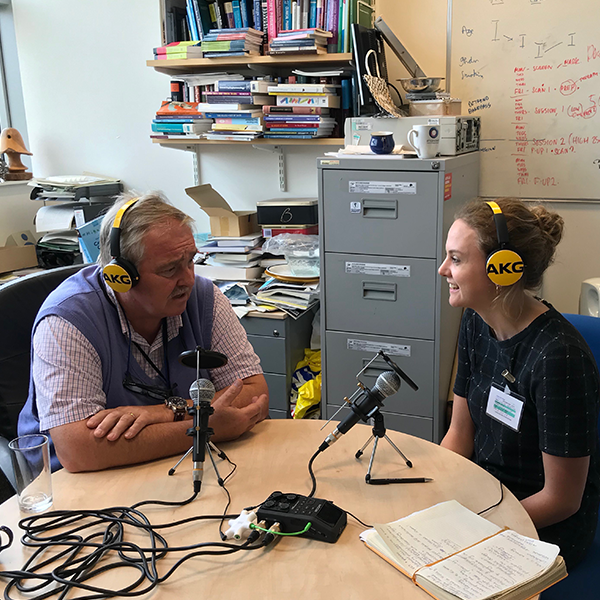
How can psychedelic drugs be used to treat mental illness? Former government drugs tsar Professor David Nutt is investigating how psilocybin – the active ingredient in magic mushrooms – could be used to revolutionise treatment for depression. David explains why he thinks it's working and the bureaucracy involved in researching illegal substances that leave him "treated like a drug dealer".